
The New Third Mumbai Connection
As everyone fights over space in the city, the government has just approved the land they call Third Mumbai near the Atal Setu. This new city is built on a completely different FSI strategy designed to correct every mistake we made in the earlier sections of town.
- Landowners in the Raigad corridor are given the option to take payment in the form of FSI or TDR, which they then sell to developers at huge profits.
- The area is planned to function as a self-sustaining center, with taller buildings and wider roads to avoid the typical traffic jams common in areas such as Dadar and Andheri.
- The prices in nearby areas like Ulwe and Dronagiri are currently soaring because people realize that high FSI near a major maritime link is the recipe for long-term prosperity.
The Vertical Reality of Metro Corridors
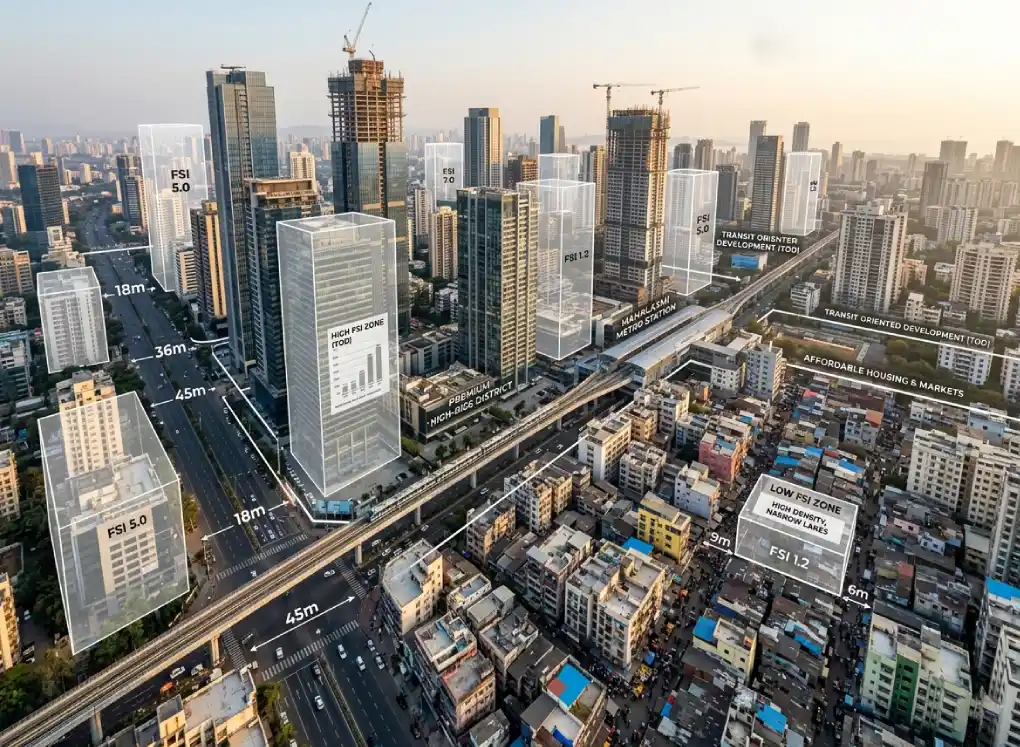
The biggest change that will affect the average consumer in 2026 will be the Transit Oriented Development policy, which basically means that if you reside close to a Metro station, you can build more than. This is why you will see massive buildings going up within 500 meters of each new Metro line running across Colaba to BKC, and beyond.
- These plots have an FSI of 4 or 5, allowing developers to construct ultra-luxe penthouses with views that were not possible only a few years ago.
- Living in an area that is in a high FSI zone close to the Metro is a sign that the value of your home is likely to increase more quickly than a single-family home located in a peaceful, but unconnected part of the suburbs.
- It is important to determine whether your property is located within this zone, as it could indicate that your society is the richest source of undeveloped rights to development that builders will pay millions for.
Fire Safety is Now Linked to Your Floor Count
In a town growing faster than ever before, fire safety rules are becoming more stringent in 2026, especially for buildings on narrower roads. The government has recognized that it is impossible to add floors without allowing firefighters enough space to turn, which will save lives.
- Constructions over 32 meters tall now require special lifts for firefighter evacuation and large water tanks, which were not required in older ten-story structures.
- If your home is situated in a narrow lane that is less than nine meters wide, your construction company must now adhere to very specific safety guidelines to be granted permission to extend beyond the limit of height.
- This is an enormous advantage for buyers, as it means your high-rise house is safer than it used to be, even though it comes with additional maintenance costs.
Frequently Asked Questions
Yes because more FSI means more residents using the lifts and water pumps which puts a lot more strain on the building’s infrastructure over time.
This is a huge trap because the BMC only looks at the official sanctioned road width so you should always verify the city survey records before you sign anything.
No, the road width acts as a hard cap on how high the building can go, regardless of how much TDR or extra FSI the developer has in his pocket.
With the new FSI perks and the Atal Setu connectivity, it is probably one of the few places left where you can get a large home at a price that doesn’t break the bank.
Everything in Mumbai real estate boils down to these hidden numbers and the policies that change every few months in some government office. The smart move is to always check the road width and the Metro distance before you even step into a sample flat, because the view might be nice today, but a policy change could block it tomorrow.

Write Your Comment