
Buyer Rights: Pune Developer Ordered to Refund Homebuyers

Buyer Rights Pune Developer Ordered to Refund Homebuyers

A home purchase is among the most important financial and emotional milestones in a person’s life. It is for many years of financial savings and the promise of a secure future. But if the actual condition of a home does not correspond to the promises made during the presentation, the dream could quickly become the source of anxiety. A recent landmark ruling from the Maharashtra Real Estate Regulatory Authority (MahaRERA) has delivered a powerful signal to the real estate industry by advocating for consumers’ rights.

The Conflict: A Promise of Space

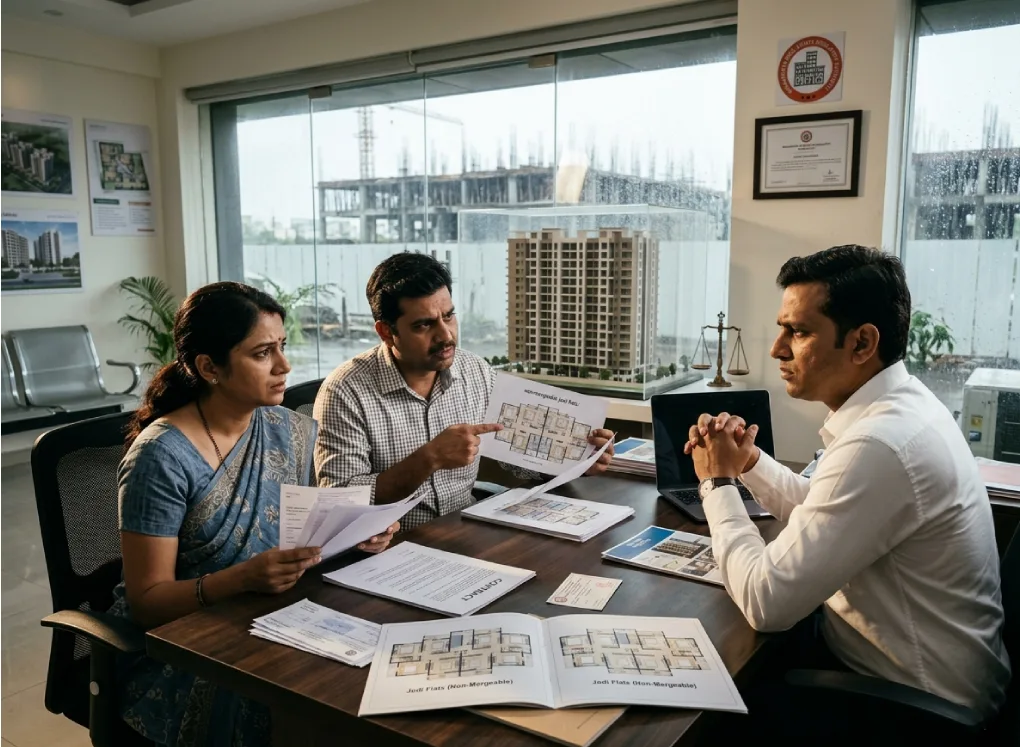
The incident is about a couple living in Pune seeking an expansive home. To meet their needs, they were provided with what’s commonly referred to within the property industry in Pune as “jodi flats.” In essence, they are two apartments designed to be connected to form a large, seamless living space.
Attracted by the prospect of a large house and a huge property, the purchasers made a large payment to secure the properties. Within 10 days of booking, they discovered a major flaw with the property: the two flats couldn’t be combined into a single unit due to design or structural restrictions. Convinced that the apartment no longer met their needs, the couple immediately demanded cancellation and a full refund of their deposit.

The Developer’s Refusal

Despite receiving a cancellation request shortly after the reservation, the builder refused to pay the full amount. The developer sought to recover some of the funds, citing the company’s policies and administrative costs. This is a problem for homebuyers in India. After the funds have been paid, obtaining them back, even if the item isn’t as advertised, could be a difficult fight.
The buyers, feeling wronged, approached MahaRERA, the state’s property watchdog and monitor, to demand justice. They claimed that the main reason they opted to enter into the contract was the “mergeable” nature of the flats. Since this was not the case, the contract must be declared annulled without cost.

The MahaRERA Ruling

Despite receiving a cancellation request shortly after the reservation, the builder refused to pay the full amount. The developer sought to recover some of the funds, citing the company’s policies and administrative costs. This is a problem for homebuyers in India. After the funds have been paid, getting them back, even if the item isn’t as advertised, could be a difficult fight.
The buyers, feeling wronged, approached MahaRERA, the state’s property watchdog and monitor, to demand justice. They claimed that the main reason they opted to make the contract was the “mergeable” nature of the flats. Since this was not the case, the contract must be declared annulled without cost

Why This Matters for All Homebuyers

This is an important victory for consumers’ rights and protections in India. It reinforces the fundamentals that all potential homeowners must be aware of:

  1. A right to Information: A buyer is entitled to have access to every technical aspect regarding the home. If a feature is offered (like the ability to cut a wall to connect two rooms), it has to be possible.
  2. Fair Cancellation Policy: While developers do incur administrative costs, they should not use these as a reason to keep large amounts of money if cancellations are triggered due to an error or misrepresentation by the developer.
  3. speed of action. In this instance, the customers acted within 10 days. Their swift response was proof that they didn’t experience an emotional change; instead, they had a real awareness that their product wasn’t as advertised.
  4. The power of the Regulator: Before the advent of RERA, buyers had to wage costly, lengthy legal battles before the civil court. Today, there’s an organization that can handle these disputes more efficiently.

Lessons for the Real Estate Industry

This case is an alarm for developers. In a world where people are more conscious of their rights, “selling a dream” must be backed up by “building the reality.” Transparency during the booking process is no longer an option. It is an absolute legal requirement.
Developers are now expected to present the structural certificate or architectural plans in advance when they offer custom solutions, such as joint flats. If they are honest about what can and cannot be done, builders can prevent legal disputes and build lasting trust with their customers.

How to Protect Yourself When Buying Property

If you are currently looking to invest in real estate, take a page out of the Pune couple’s book:

  • Verify Before Paying: Always request the government-approved floor plans. If you are planning to combine flats, request an official written confirmation or a structural engineer’s report stating that the walls aren’t load-bearing and can be removed.
  • Learn the Fine Print: Understand the cancellation clauses in the letter of allotment. Be aware of exactly how much will be taken and under what conditions.
  • Take action immediately: If you find an inconsistency between the promises made and what’s written on paper, address the issue quickly in writing.
  • Don’t be afraid to seek help: Regulatory bodies like RERA can help you. If a developer is acting unjustly, submitting an official complaint is an acceptable and efficient option.

Disclaimer: This article is for general informational purposes only and does not constitute legal advice. Readers should consult with a legal professional or the official MahaRERA website for specific property-related disputes and regulations.

Also Read: Hyderabad’s Growing Appeal: A Major New Office Deal

Source: Hindustan Times

    ✅ I agree to be contacted by Behind The Bricks Team via WhatsApp, SMS, phone, email etc.

    .

    Leave a Reply

    Your email address will not be published. Required fields are marked *

    Index