A New Way to Grow: The Participatory Model
Traditionally, when a government needs land for a big project, it often involves a difficult process of acquisition that can leave local landowners feeling displaced. For Mumbai 3.0, the MMRDA has taken a different path. They are using a “participatory model,” which essentially means that the people who own the land are treated as partners in the development rather than just sellers.
Under this framework, landowners were given several choices. Some chose direct payment, while others opted for “land pooling,” where they get a percentage of the developed land back once the project is finished. This approach has built a high level of trust between the government and the community, allowing the MMRDA to secure over 200 acres in a remarkably short amount of time.
Why Raigad? The Strategic Advantage
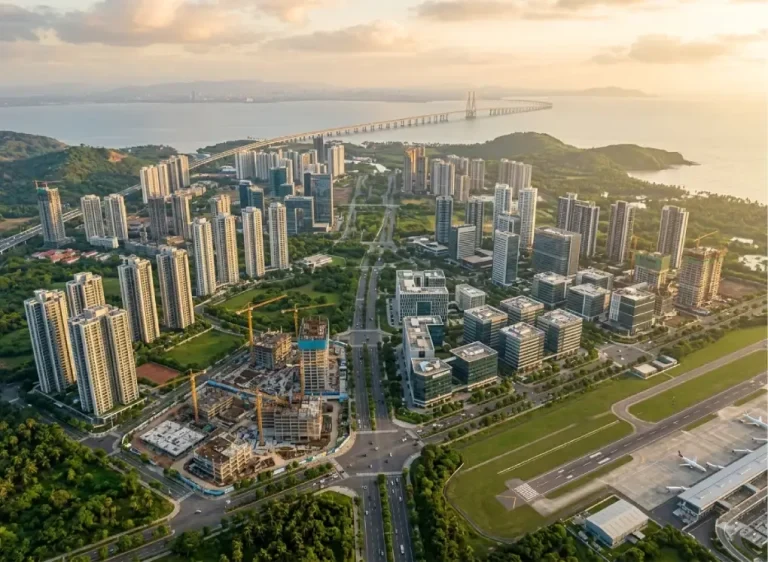
The decision to expand this project along the Raigad-Pen corridor is not an accident. The area is well-positioned to take advantage of several major infrastructure projects, which are already changing the way people move through the region:
- Atal Setu (MTHL): The massive sea bridge that connects Mumbai to the mainland drastically reduces travel time.
- Navi Mumbai International Airport: A world-class airport that will bring business from all over the world and visitors to the area’s doorstep.
- Multi-Modal Corridor: A network of roads and transportation links that will link different regions seamlessly.
By constructing Mumbai 3.0 close to these cities, the government is ensuring that the city will be connected to other parts of India and to the rest of the world on the first day.
What Will Mumbai 3.0 Look Like?
The idea behind this 216-acre plot, as well as the surrounding expansion center, is to build a self-sustaining city. Unlike older urban areas, which tend to be crowded and lack planning, Mumbai 3.0 is being developed as an integrated system.
The plans for the area comprise:
- Financial Districts and Tech Specialized zones for financial institutions, banks, and tech firms.
- Global Hubs. The space allows international businesses to establish “capability centers” that manage complex tasks that require global operations.
- Data Centres Services to serve the online world, containing servers that help keep our apps as well as websites up and running.
- Educational and Healthcare: Modern hospitals and schools that make sure that residents don’t need to travel long distances for vital services.
- logistics and warehouses Innovative facilities that manage the flow of products, aiding in the e-commerce and manufacturing sectors.
Economic Impact: 2 Lakh New Jobs
Real Estate and Regional Growth
In the real estate industry, it’s a game-changer. Mumbai 3.0’s development: Mumbai 3.0 is expected to transform the Raigad-Pen corridor into an important real estate hotspot. As infrastructure improves, more employment opportunities are created, and more people move in, the demand for residential and commercial properties will naturally increase.
This project serves more than just easing the strain on Mumbai city. Mumbai. By creating a modern, well-planned city near it, it is hoped that the city will offer the highest standard of living, with greater open space and better amenities, without requiring relocation far from the city’s economic center.

Write Your Comment