
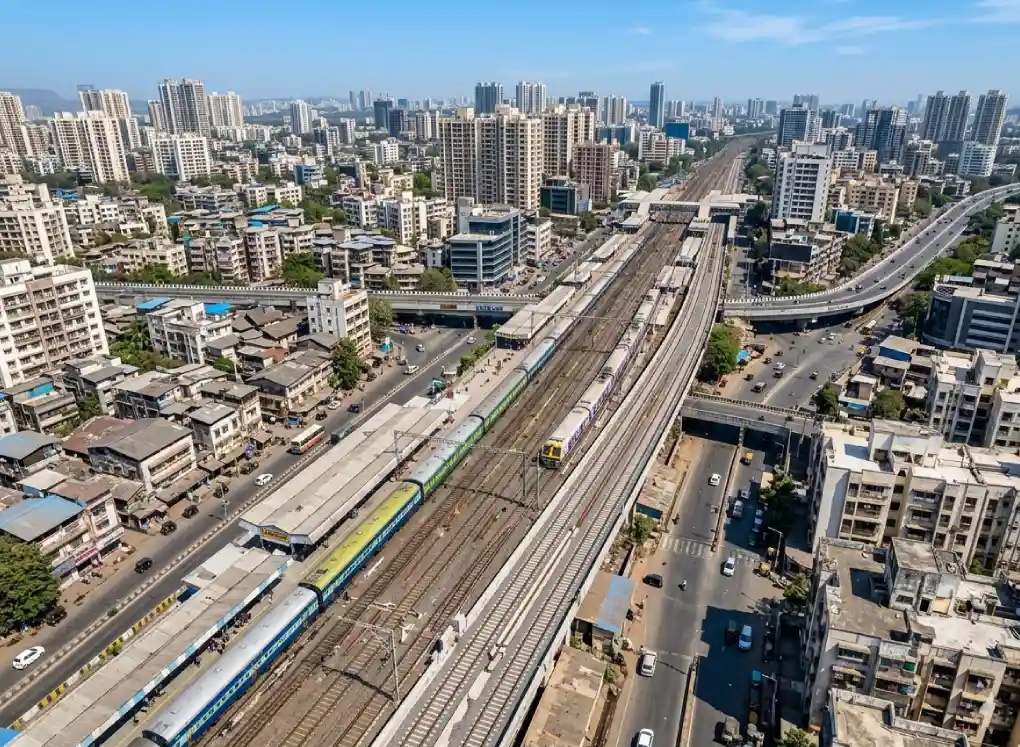
Segregation of the Express and Local Chaos
The biggest win for every office-goer in 2026 is that the local trains and the long-distance trains finally have their own separate playgrounds, so they do not keep bumping into each other. By moving the heavy mail trains to this new sixth track, the railway has freed up the existing fast lines for the exclusive use of suburban commuters.
- Long-distance trains arriving from Bandra Terminus now use a dedicated corridor, so they no longer block the path of your fast local during peak hours.
- This separation has directly improved the punctuality of Western Line services by nearly 20%, because a single delay in an express train no longer ripples through the whole network.
- Railway officials have already started utilizing this extra capacity to squeeze in nearly ten additional local services to handle the growing crowds from the northern suburbs.
The Digital Brain Behind Borivali Station
This project was not just about laying down some iron tracks but also about upgrading the ancient signaling systems that had held the entire Western Railway back for years. Borivali station now runs on a massive electronic interlocking system, which is like replacing an old keypad phone with the latest high-speed computer.
- The new digital controls enable much faster track switching, allowing trains to enter and exit the platforms with much less waiting time at the outer signals.
- They had to completely rebuild Bridge Number Sixty-One and install heavy-duty joints capable of handling the massive weight of twenty-four coach express trains at high speeds.
- This upgrade also includes automated fault detection, helping maintenance teams fix signal issues before they escalate into a total line shutdown during the monsoon.
Faster Speeds and Shorter Travel Times
Commuters are finally seeing the needle move on the speedometer because the new tracks have been cleared for much higher speeds than the old congested lines. You can actually feel the difference when the train skips the Kandivali stretch because the speed limits of the crossing express trains no longer restrict the local.
- The new tracks are authorized for speeds up to eighty kilometers per hour, which is a significant jump from the crawling speeds we were used to in this bottleneck.
- Most daily travelers are reporting a solid 10 to 15-minute reduction in their total travel time from Borivali to Churchgate during the morning rush.
- The smoother flow of traffic has also reduced wear and tear on the local train rakes, leading to fewer breakdowns and less frequent cancellations of scheduled services.
Frequently Asked Questions
Yes, the final stretch between Kandivali and Borivali was completed in January 2026, and the entire dedicated express train corridor is now operational.
It helps indirectly by allowing the railways to run more frequent services, but the real relief will come only when the Harbour Line extension reaches Borivali later this year.
It mostly benefits fast-line users, but since the fast lines are now clearer, overall congestion at major junctions like Borivali has decreased for everyone.
Even if an express train is running behind schedule, it now stays on its own dedicated sixth track, so it does not affect the frequency of the regular local trains.
The reality of Mumbai is that we are always playing catch-up with the population, but this sixth line is a rare instance where the infrastructure has finally provided some breathing room for the commoner. It took a lot of painful mega blocks and weekend cancellations to get here, but the result is a much more predictable, faster commute for lakhs of people living in the northern suburbs. The gap between arriving at your office on time and getting a memo from your boss often comes down to these three kilometers of track, and for once, the railways have delivered a solid solution. We still have the struggle of platform crowds to deal with, but at least the trains are moving, and the days of standing still between Kandivali and Borivali for no reason are mostly behind us.

Write Your Comment