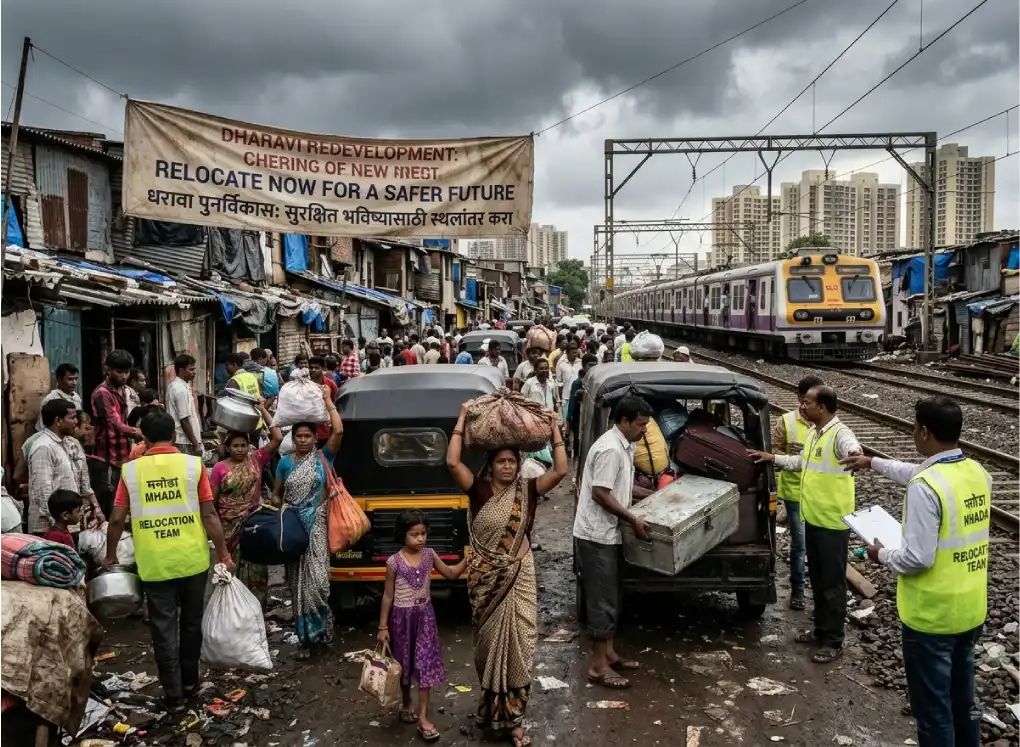
For decades, Dharavi has been associated with the enduring energy of Mumbai. As one of the largest informal settlements in the world, it is a complicated web of industry, community, and historical significance. But a significant shift is underway. The Maharashtra local and the Maharashtra government have recently issued a stern appeal to people residing within the railway area in Matunga: it’s time to get out of the area before monsoon clouds begin to arrive.
The Race Against the Rain
The time of this appeal isn’t an accident. Mumbai’s monsoon season is known for its ferocity, often leaving the city at a standstill due to massive flooding and infrastructure challenges. For families living in temporary or informal structures near rail tracks, the wet season can pose serious safety hazards.
Authorities are concerned that heavy downpours could cause flooding and unstable ground conditions, rendering the areas unfit for habitation. In urging residents to move immediately, the government hopes to avoid potential catastrophes and ensure that families can be settled in safer, more permanent homes before the first rains hit the roads.
The Larger Vision: Redeveloping Dharavi
The move is a crucial part of the bigger picture the Dharavi Redevelopment Project. Since the beginning, there has plans for transforming the sprawling region into a bustling urban centre which will have better facilities, cleaner living conditions, and more official housing.
The area that is being discussed, particularly the land that is part of the railway near Matunga is crucial for the beginning stages of this huge initiative. After clearing the patches and removing the weeds, developers can lay building the foundations for new structures and infrastructure which will ultimately accommodate thousands of residents who are eligible. It is the goal to upgrade cramped homes by high-rise homes that provide essential amenities such as power, water and electricity and sanitary amenities which have not been available throughout the region for in the past.
Where Are the Families Going?
One of the main issues for anyone who is facing relocation is “Where will we go?” The government has made it clear that this isn’t an eviction without a strategy. Families who are eligible and who satisfy the requirements set by the authority for redevelopment are provided with alternative housing.
A majority of these families are moving into recently constructed transit camps or rehabilitation facilities. Even though leaving a place of residence for an extended period is not straightforward, officials insist that the new facilities offer the most secure environment, particularly during stormy weather. The new home is intended to bridge the gap between their current home and their future, permanent residences within the newly renovated Dharavi.
Challenges and Communication
Moving thousands of people is a huge undertaking that comes with significant emotional and logistical challenges. Many residents have lived in Matunga for a long time, creating communities and businesses that have shaped their lives. There is a common feeling of anxiety and trepidation in the face of uncertainty.
To tackle this issue, authorities have launched outreach programs. Officials have been visiting communities to discuss the advantages of the move, review documents, and address questions about the redevelopment timeline. This move is an essential step towards a greater quality of life and a better tomorrow for Dharavi’s children.
Impact on Mumbai’s Infrastructure
Beyond the immediate benefits to citizens, this relocation is critical to the city’s transportation system. The property belongs to the railways, and reclaiming it enables track expansion and maintenance, which millions of Mumbai residents use daily. Improved railway infrastructure means fewer delays and safer commutes around the city.
Furthermore, the effective reconstruction of Dharavi is likely to improve Mumbai’s real estate and economic health. By incorporating this “city within a city” into the formal urban structure, Mumbai can address its housing crisis and boost its global reputation as a modern metropolis.
Looking Ahead
The next couple of weeks are crucial. As humidity climbs and the skies turn gray, pressure on authorities and residents will rise. The results of this relocation campaign can serve as an important test for the remainder of the
Dharavi Redevelopment Project.
If the transition process is managed efficiently and compassionately, it can set the stage for positive urban renewal projects across India. It is a step away from the plight of the past towards the future in which every citizen, regardless of their financial background, can enjoy an appropriate and safe living space.

Write Your Comment